Recently, OpenAI quietly launched a shopping research agent inside ChatGPT. It's not a chatbot that answers product questions, it's a specialized system that conducts extended research sessions and delivers personalized buyer's guides. As part of our efforts at Shapely Labs, we've been testing it extensively. Here's what we found and why it matters for every brand competing for visibility.
Towards More Personalized and Smarter Shopping Experiences
The Shopping Research agent is a session-based tool that goes far beyond simple Q&A. When you ask for a product recommendation, it first builds a constraint profile: budget, preferences, recipient, use case. It asks clarifying questions in real-time if anything is unclear. It also draws on your chat history to understand you better, without requiring you to re-explain your preferences. The goal isn't to give you a quick answer. It's to give you the right answer, tailored to your specific situation.
Specialized Reasoning Aimed at Making Shopping Decisions
Once constraints are established, the agent generates its own search queries based on what it's looking for. It then searches the web for products in the relevant category, retrieving not just the top result but many candidates (potentially 10-20 or more). This is where traditional SEO assumptions break down. Ranking #1 matters less than simply appearing in the consideration set.
But appearing isn't enough. The agent evaluates content from multiple source types, not just your brand's website, but also Reddit discussions, customer reviews, professional reviews, opinion articles, and news coverage. Based on our analysis and recent academic research, these sources appear to be categorized into three types: Brand (your owned content), Social (Reddit, forums, user-generated content), and Earned (professional reviews, editorial coverage, news, research articles).
The agent weighs these differently. Earned media sources appear to carry more authority in shaping final recommendations than brand-owned content. Your product page might confirm specs and pricing, but the agent looks to third-party sources for the reasons to recommend you.
This is all still emerging and evolving, but the pattern is clear: what others say about you (and how they say it) matters a lot.
Across all these sources, the agent evaluates content against a core question: does this product match the user's constraints? Is the information clear, structured, and machine-readable? Can the agent extract specific reasons to recommend this product over others? Whether it's your website, a review article, or a Reddit thread, content must now serve two masters: humans who might read it, and AI agents that will evaluate it before any human ever sees the recommendation.
Case Study: Deep Dive on the Christmas Holiday Shopping Seasons
We analyzed thousands of reddit threads in r/Santashelpers and r/GiftIdeas enquiring about gift ideas. We transferred them into prompts with context and constraints and injected them in Shopping Agents. We then tracked which brands were winning when it came to Agent recommendation patterns confirming what you'd expect: Amazon dominates Retail, LEGO leads Toys & Games, Starbucks tops Food & Beverage.
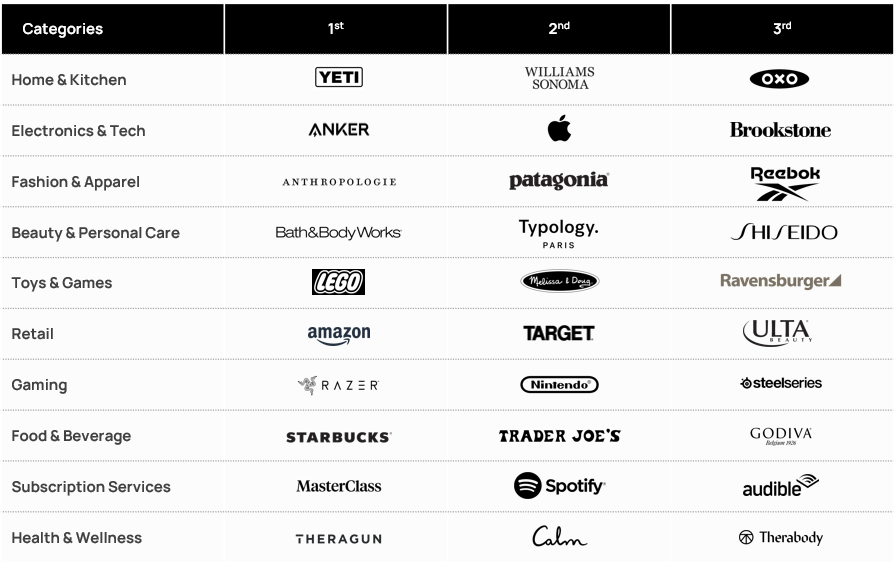
However, Anker beats Apple in Electronics. Theragun owns Health & Wellness. MasterClass captures nearly half of Subscription above Spotify. The reason behind that is that agents don't go by default to the largest and most famous brands.
It searches deeply, evaluates constraints, and surfaces the brand with the best value proposition for users.
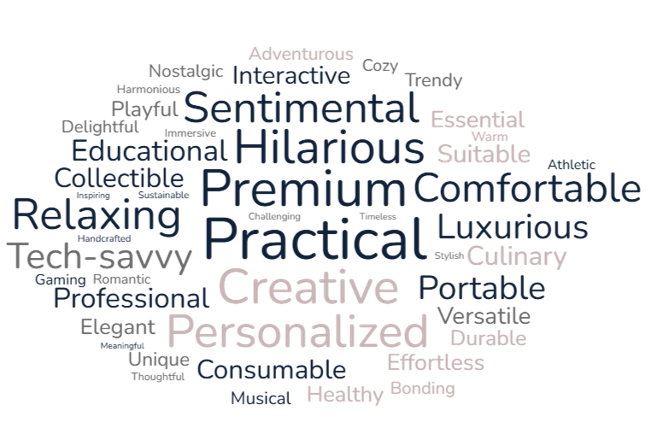
The brands winning in AI-mediated discovery are the ones with structured and high-quality product catalogs, machine-readable brand identities and consistent authoritative signals across the web.
What This Means for Brands
By 2030, AI shopping agents are expected to drive $300 billion to $1 trillion in US B2C retail revenue. Globally, the impact could be three to five times larger. Preparing for shopping agents is no longer optional — it’s how your brands will stand out in the near future.
Traditional SEO practices are also adapting to AI agents searching the web based on how humans use them. Information about brands and products needs to appear in top results, not just for human search queries, but also for the queries AI agents generate. Practitioners will also need the content to be optimized for AI evaluation: clear specifications, explicit differentiators, structured data that machines can parse. For websites to be relevant for AI agents, they need to function as AI-readable product databases. With humans’ shift toward using AI search engines, and they’re also still learning how to do so, decisions are made based on those results, and even by those shopping agents themselves.
Best practices for the generative search era are yet to be defined. And that’s why keeping up to date on research that aims to understand and uncover how AI shopping agents work (and how AI search in general work) is crucial for practitioners.
The optimization for this era is not just to appear for humans, it’s more to be chosen and favored by AI shopping agents.
For more information about our research methodology or to discuss partnership opportunities, contact us at contact@shapelylabs.com